Table of Contents
ToggleIntroduction
In today’s competitive world, keeping customers happy is the key to success. Every business, big or small, needs a system to manage customer relationships efficiently. This is where Customer Relationship Management (CRM) plays an important role. A well-organized CRM system helps businesses maintain customer records, improve sales, and offer better services.
Many people think CRM is just software, but in reality, it is a complete strategy that helps businesses grow. I have seen many businessmen struggle to manage their customer interactions. They use spreadsheets, notes, and multiple apps but still miss out on important follow-ups. CRM helps solve these issues by keeping everything in one place.
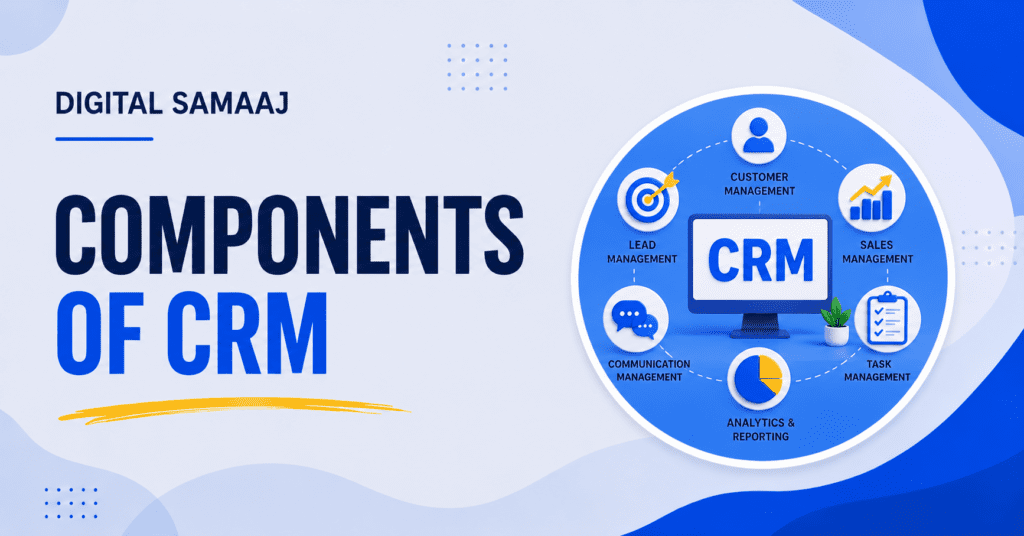
If you are running a business and want to improve customer relationships, understanding the components of CRM is crucial. In this blog, I will explain the 7 essential components of CRM that can help your business grow.
Customer Data Management
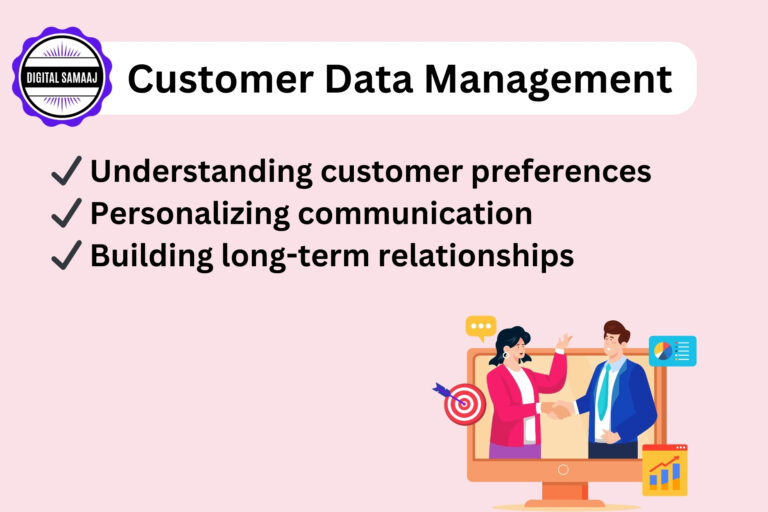
One of the most important components of CRM is managing customer data properly. Many businesses fail because they do not keep proper records of their customers. CRM helps store customer details like names, phone numbers, email IDs, past purchases, and interactions.
Imagine running a business where you have hundreds of customers, and you forget who purchased what. If you do not track customer details, you will lose sales opportunities. CRM ensures that all customer information is stored in one place and can be accessed anytime.
Good customer data management helps in:
✔ Understanding customer preferences
✔ Personalizing communication
✔ Building long-term relationships
Having all customer information in one place makes follow-ups easy and helps in better decision-making.
Sales Automation
Sales are the backbone of any business. However, handling sales manually can be time-consuming and inefficient. CRM helps in automating the sales process, making it easier for businesses to manage leads, follow-ups, and conversions.
I remember a friend who was struggling with his sales team. They were using WhatsApp and Excel sheets to track leads, but many leads were lost because of poor follow-ups. After implementing a CRM system, their sales improved because they could track every lead properly.
With sales automation, you can:
✔ Set reminders for follow-ups
✔ Track sales progress
✔ Send automated emails to potential customers
This not only increases efficiency but also improves conversion rates. A CRM system ensures that no lead is missed, helping businesses grow faster.
Marketing Automation
Marketing plays a crucial role in attracting customers. But handling multiple marketing campaigns manually is difficult. CRM helps in automating marketing tasks, making it easier to reach the right audience at the right time.
For example, businesses can send automated emails, SMS, and social media messages to customers based on their interests. If a customer shows interest in a product but does not purchase it, the CRM can send a reminder email automatically.
With marketing automation, businesses can:
✔ Run targeted campaigns
✔ Save time and effort
✔ Increase engagement and sales
CRM makes sure that marketing efforts are not wasted and every potential customer is reached effectively.
Customer Support and Service
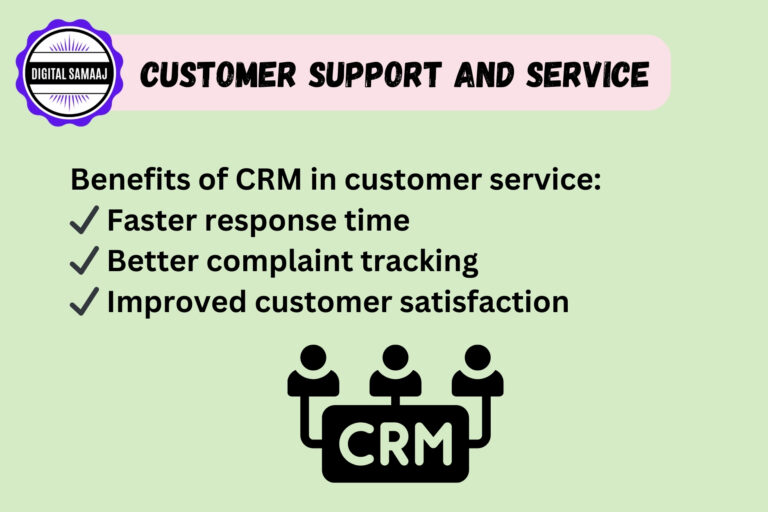
Providing good customer support is essential for business success. If a customer has a complaint and does not get a quick response, they will go to a competitor. A CRM system helps in managing customer support efficiently by keeping track of all customer queries.
I have seen many small businesses lose customers just because they do not respond to queries on time. With CRM, businesses can set up a proper ticketing system where customer issues are assigned to the right person and resolved quickly.
Benefits of CRM in customer service:
✔ Faster response time
✔ Better complaint tracking
✔ Improved customer satisfaction
Happy customers bring more referrals and repeat business. That is why good customer service is crucial.
Reporting and Analytics
Many businesses fail because they do not analyze their data properly. CRM provides detailed reports and analytics, helping businesses make informed decisions.
For example, a CRM system can show which products are selling the most, which marketing campaigns are working, and which customers need more attention. This data helps businesses improve their strategies and increase profits.
With CRM analytics, businesses can:
✔ Identify sales trends
✔ Measure customer engagement
✔ Improve business strategies
Understanding data is important for growth, and CRM makes it easy to analyze business performance.
Integration with Other Tools
A good CRM system integrates with other tools like email, social media, payment systems, and accounting software. This makes business operations smooth and efficient.
For example, if a CRM is linked with email marketing software, businesses can send automated emails to customers without switching between platforms. Similarly, integration with accounting software helps in tracking payments and invoices easily.
Benefits of CRM integration:
✔ Saves time by reducing manual work
✔ Improves accuracy by keeping all data in one place
✔ Enhances productivity by connecting different tools
CRM acts as a central hub that connects different business functions, making operations hassle-free.

User Access and Security
Customer data is sensitive and should be protected from unauthorized access. A CRM system provides strong security features, ensuring that only the right people can access customer information.
Many businesses store customer data in Excel sheets or Google Docs, which are not secure. If an employee leaves the company, they can misuse this data. CRM systems provide role-based access, meaning employees can only access the information they need.
Key security features of CRM:
✔ Data encryption to protect customer details
✔ Role-based access to prevent unauthorized use
✔ Regular backups to avoid data loss
Keeping customer data secure builds trust and ensures smooth business operations.
🚀 Reserve Your FREE Spot Now & Join the Upcoming AI + Digital Marketing Webinar!
Fill in Your Details to Get Instant Access
Conclusion
A CRM system is not just a software; it is a business strategy that helps in managing customer relationships effectively. By using a CRM system, businesses can improve sales, marketing, customer service, and overall efficiency.
If you are running a business and struggling to manage customer interactions, it is time to implement CRM. The 7 essential components of CRM discussed in this blog will help you understand how a CRM system can benefit your business.
To learn more about CRM and digital marketing strategies, visit Digital Samaaj and explore our digital marketing courses in Hindi. These courses will help you grow your business using simple and effective techniques.